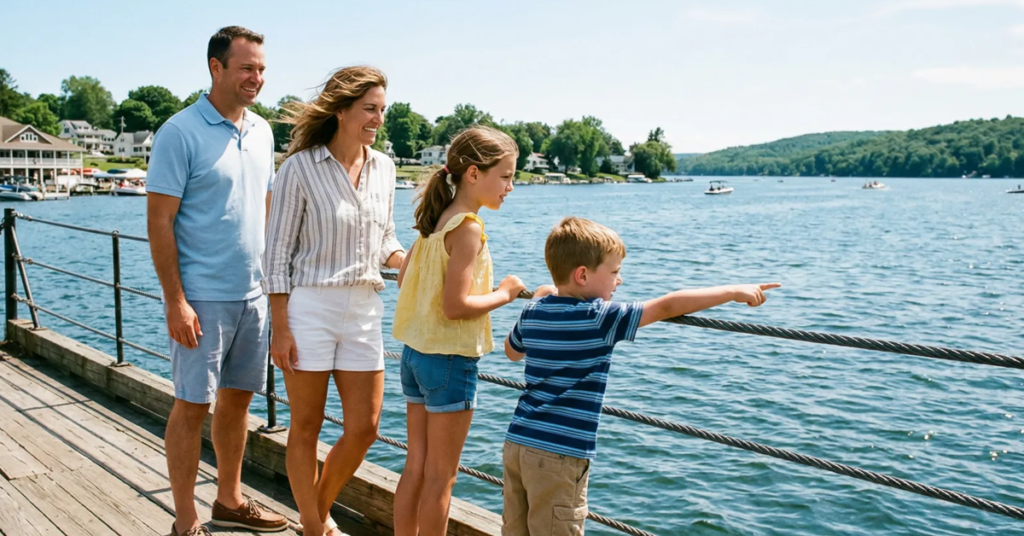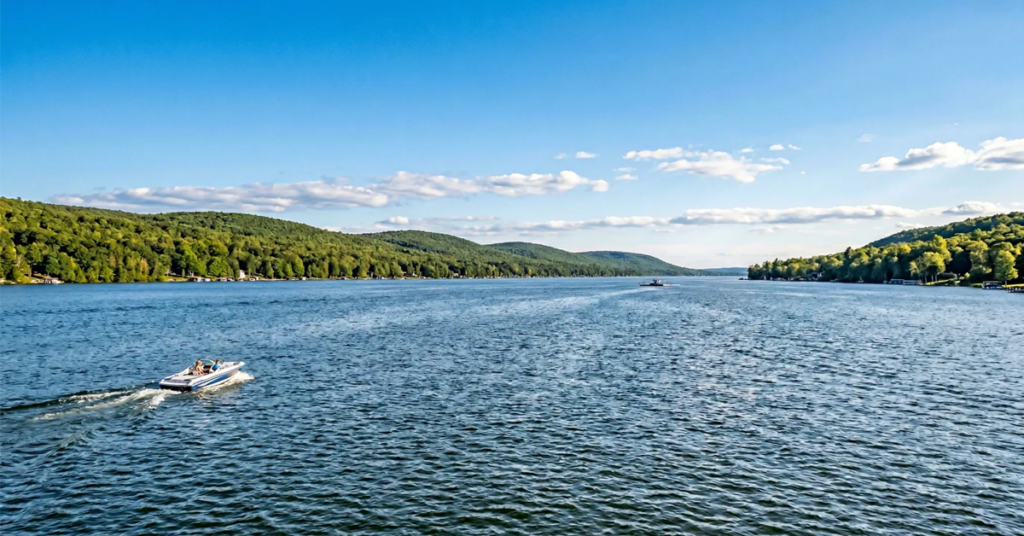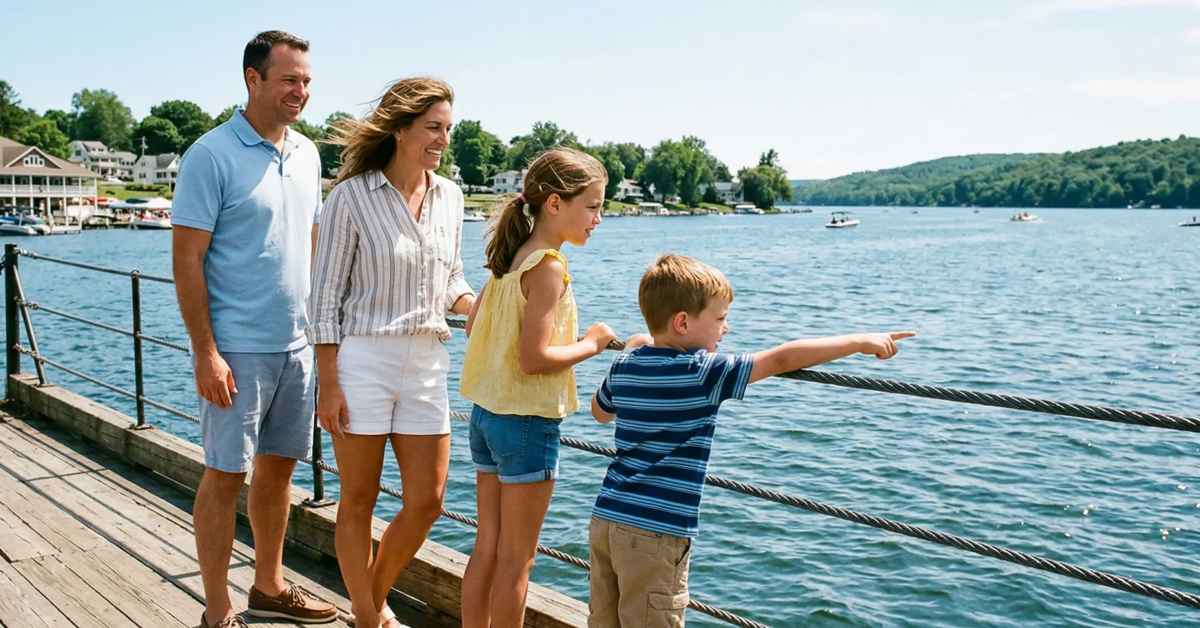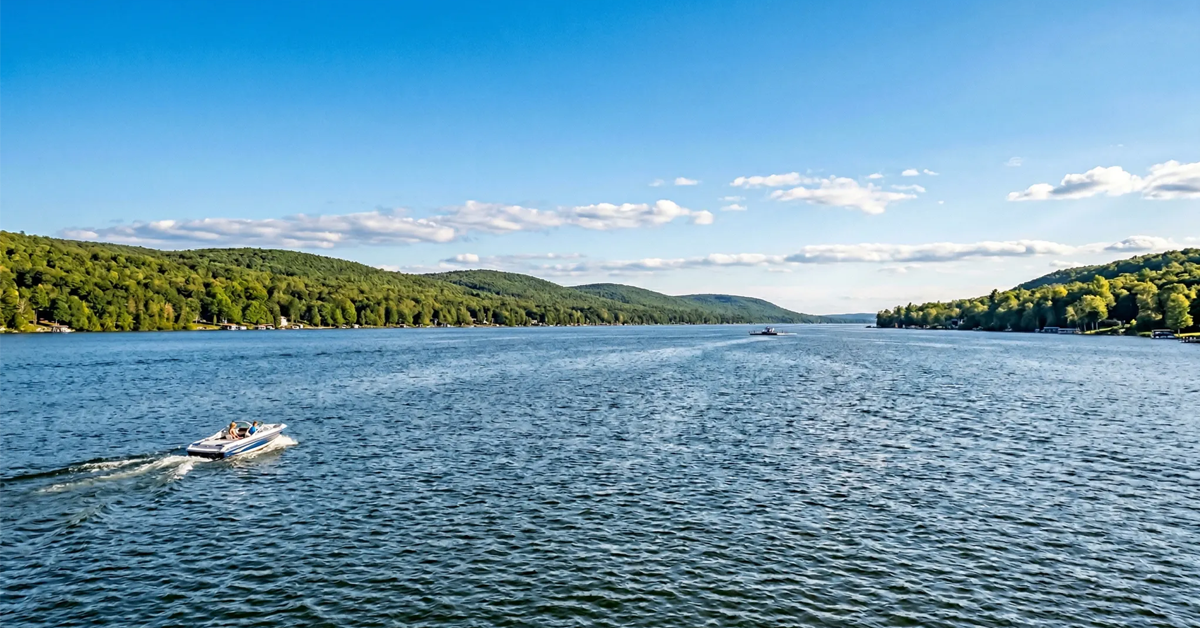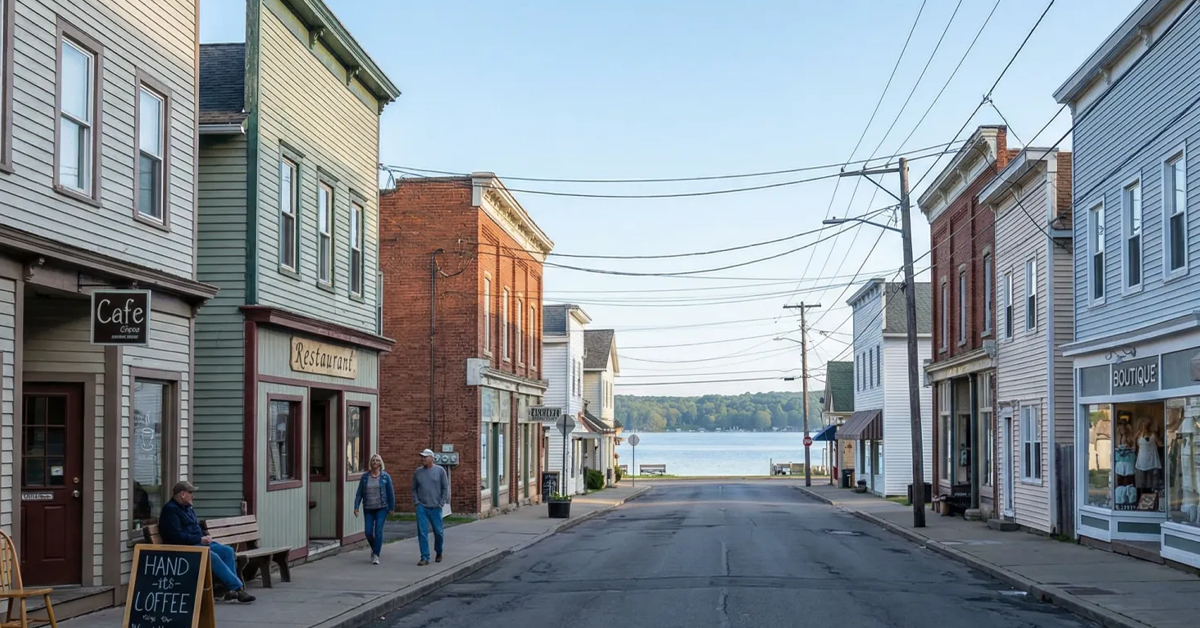
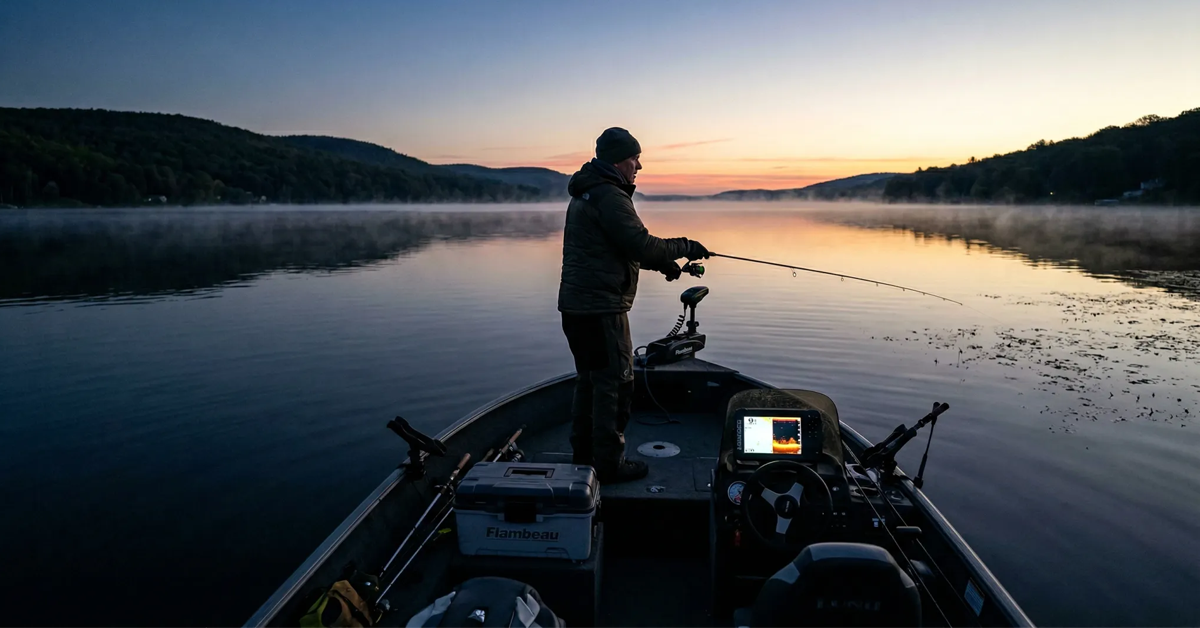
Lake Chautauqua has been drawing serious anglers for well over a century. A 17-mile glacial lake sitting at 1,300 feet above sea level in the hills of western New York, it holds a diverse population of warm-water species that rewards both the dedicated tournament angler and the visitor who simply wants to spend a morning on the water with a line in. This guide covers the species, the seasons, the access points, the regulations, and the practical details you need to fish Lake Chautauqua from Bemus Point.
- 17 miles long
- 13,080 surface acres
- 21 ft average depth
- 75 ft maximum depth
- 4 primary target species
Why Lake Chautauqua Is a Premier Fishing Destination
Lake Chautauqua has a strong reputation among anglers in the Northeast. The lake’s combination of size, depth variation, water quality, and habitat diversity creates conditions that support healthy populations of multiple species at the same time, which is not something every lake in the region can offer.
Walleye are the lake’s signature species, with a population carefully managed by the NY DEC for decades. Muskellunge are present in trophy-class numbers, making Lake Chautauqua one of the serious muskie destinations in the state. Largemouth bass thrive in extensive weed structure. Yellow perch schools provide consistent action and excellent table fare for panfishers of all experience levels.
Bemus Point’s position at the geographic midpoint of the lake gives anglers based here access to the full range of habitat — the northern basin, the southern basin, the mid-lake structure, and the protected bays — all reachable within a reasonable run from the Bemus Point waterfront.
Target Species: What Lives in Lake Chautauqua
Four species define the Lake Chautauqua fishing experience. Each has its own seasonal pattern, preferred habitat, and best presentation.
🐟 Walleye
Peak Season: April–May and September–October | Technique: Jigging, live-bait rigs (jig-and-minnow), trolling crankbaits
The lake’s signature species and the primary target for most visiting anglers. Lake Chautauqua’s walleye population is healthy and well-managed by the NY DEC. Fish average 14–18 inches with larger specimens available, particularly in deeper mid-lake structure. Peak season is spring and fall when fish move shallow to feed aggressively.
Key Habitat: Weed edges and depth transitions at 6–18 feet; shallows in spring and fall
🐠 Yellow Perch
Peak Season: Year-round; best late summer through fall | Technique: Small jigs, spinners, live minnows
Abundant, accessible, and excellent table fare — yellow perch are ideal for anglers of all experience levels. They’re productive year-round, with late summer and fall typically the most consistent for larger fish. Great for introducing beginners to Lake Chautauqua fishing without the pressure of chasing trophy species.
Key Habitat: Mid-depth schools throughout the lake; accessible at most depths
🐡 Largemouth Bass
Peak Season: Late May through August | Technique: Soft plastics, spinnerbaits, topwater lures (morning/evening)
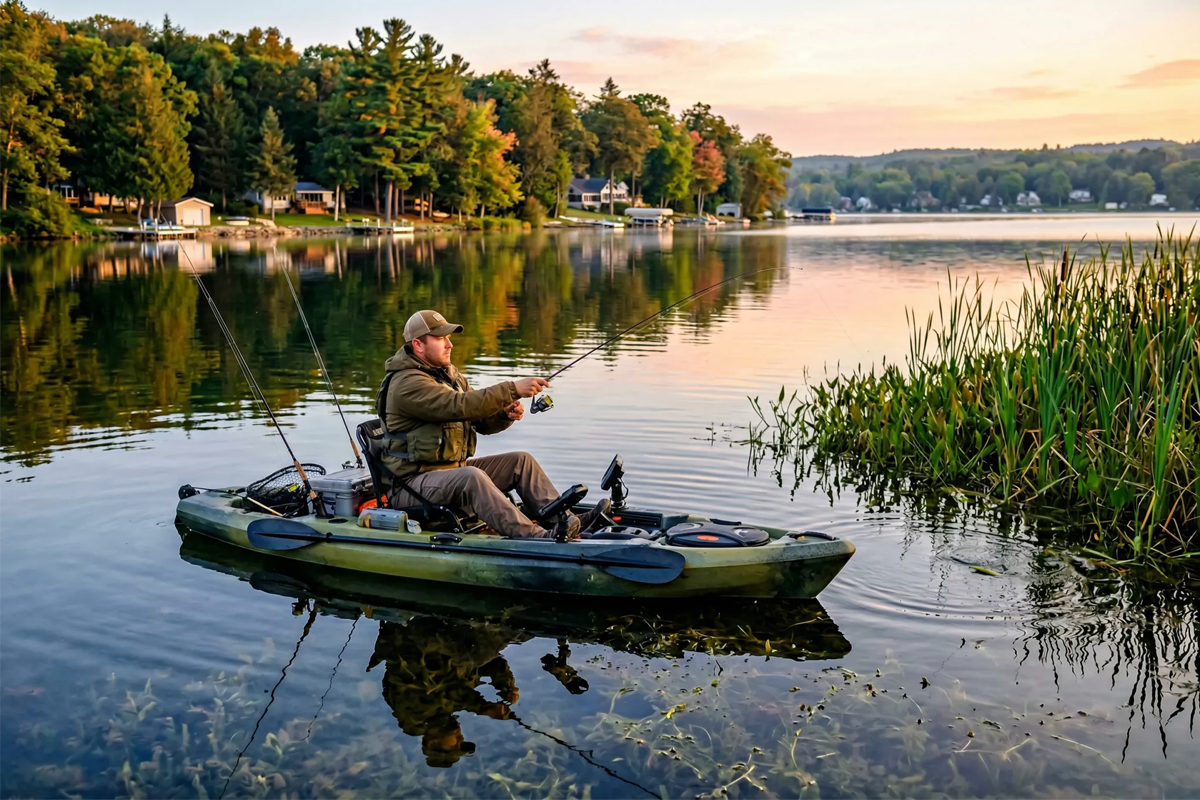
Plentiful throughout the lake in weedy shallows and dock structure. The sheltered bays near Bemus Point offer accessible bass habitat from late May through August, with the best topwater action in early morning and evening. Kayak anglers have a particular advantage in these confined, shallow areas.
Key Habitat: Weedy shallows, dock edges, emergent vegetation; bays near Bemus Point
🦈 Muskellunge (Muskie)
Peak Season: Late June through October; largest fish in September–October | Technique: Trolling large lures in open water; casting oversized bucktails/swimbaits along weed edges during low-light windows
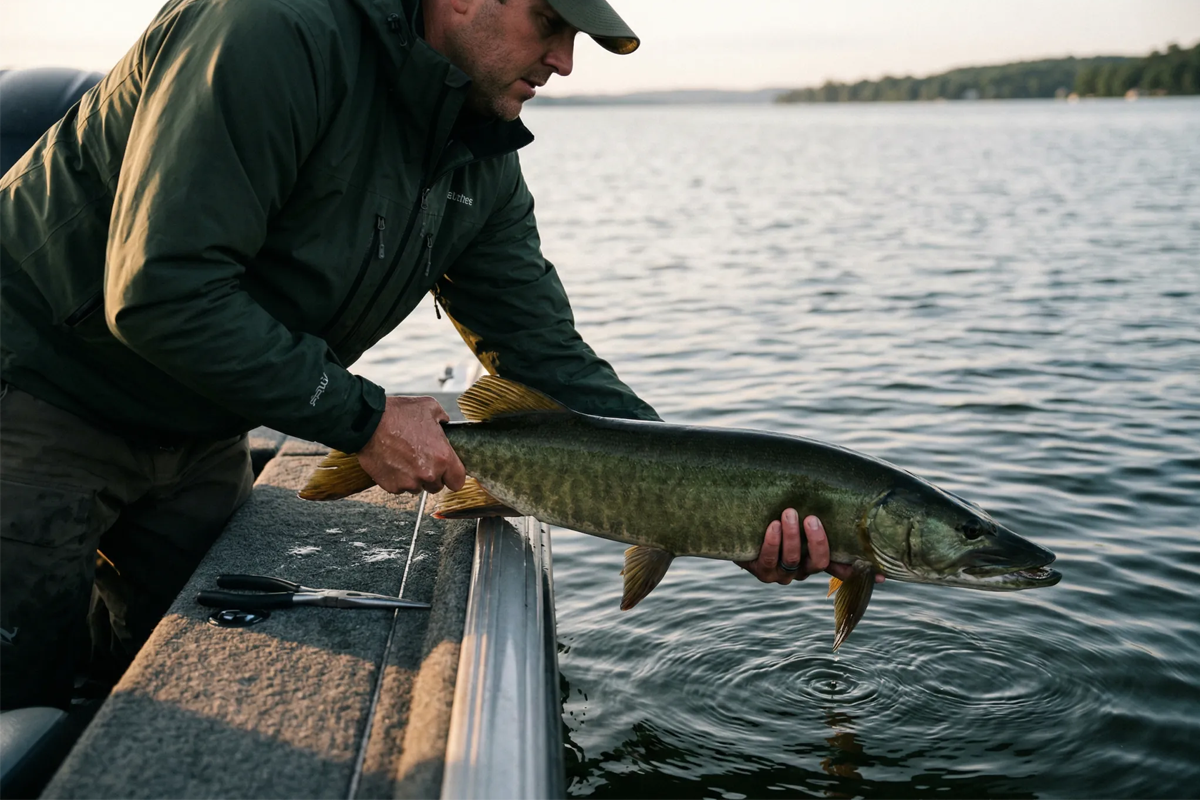
Lake Chautauqua carries a well-established muskellunge population and is considered one of the serious muskie fisheries in New York State. Trophy-class fish measuring 40 inches and beyond are present and catchable for anglers who commit the time and technique the species demands. This is a specialist fishery requiring patience, specific gear, and knowledge of the lake’s structure. Catch-and-release is strongly encouraged to preserve the trophy fishery.
Key Habitat: Open water transitions, weed edges, mid-lake humps; primarily morning and evening
Fishing by Season: When to Target What
Lake Chautauqua fishes well across most of the year. Understanding the seasonal rhythms of each species gives a significant advantage.
| Species | Seasonal Fishing |
|---|---|
| Walleye |
Spring: Peak Summer: Good Fall: Peak Winter: Ice — check regs |
| Yellow Perch |
Spring: Good Summer: Good Fall: Peak Winter: Ice fishing |
| Largemouth Bass |
Spring: Opening / Pre-spawn Summer: Peak Fall: Good Winter: Slow |
| Muskellunge |
Spring: Slow / Closed Summer: Good Fall: Peak — largest fish Winter: Slow |
Spring (April–May)
Spring is arguably the best walleye window on Lake Chautauqua. As water temperatures rise, walleye move into the shallows along rocky points and weed edges. Jig-and-minnow presentations in 6–12 feet produce consistently. Bass season opens in mid-May in New York, with pre-spawn fish active in shallow bays.
Summer (June–August)
Summer is peak season for largemouth bass and the start of serious muskie action. Bass are active in extensive weed beds; early morning and evening topwater fishing can be spectacular. Walleye move deeper in the heat but remain catchable. Perch are reliable throughout. Muskie action builds from late June onward.
Fall (September–October)
Fall is productive across most species and a good season for the angler who plans around it. Cooling temperatures trigger walleye and muskie to feed heavily. The largest muskie of the year typically come in September and October. Perch form dense schools. Fall Fest in the village adds a community dimension that makes a fall fishing trip easy to extend into a full weekend.
Winter
Lake Chautauqua supports ice fishing in most winters when conditions allow. Perch and walleye are the primary ice targets. Always confirm safe ice conditions with local sources and check current NY DEC regulations for ice fishing rules before venturing out.
Getting on the Water: Access and Launch Points
For Trailered Boats
Long Point State Park is the primary trailered launch closest to Bemus Point — paved ramp, parking, seasonal fee. The Stow boat launch on the western shore (Route 394) is free and provides good access to the northern lake.
For Kayak and Small Vessel Fishing
Kayak fishing is increasingly popular on Lake Chautauqua — silent access to shallow weed structure gives kayak anglers a genuine advantage for bass and early-season walleye. Bemus Bay Water Toys on the village waterfront offers kayak rentals suitable for fishing. Hand-carry launches available from the village waterfront.
Marine Gear and Service
ROCK Marine on Route 430 (open May–October, 716-386-1114) handles boat sales, marine accessories and gear, service and repair. A useful local source for tackle recommendations, current lake conditions, and local knowledge.
→ Full Recreation Guide — Boating, Rentals & All Lake Activities
Licenses, Limits & Regulations
Fishing on Lake Chautauqua requires a valid New York State fishing license for anglers 16 and older. Licenses are available online through the NY DEC website and from many local outfitters — purchase yours before you launch.
- NY fishing license required for all anglers age 16+ — purchase at dec.ny.gov before launching
- Walleye: minimum size and season limits apply — check current DEC regulations for Lake Chautauqua-specific rules
- Muskellunge: minimum size of 36 inches typical; season approximately June 1 through March 15 — confirm current regs
- Largemouth Bass: season opens third Saturday in June in New York; minimum size limits apply
- Yellow Perch: year-round season; daily limits apply — check current DEC regs
- Ice fishing: additional regulations apply; check DEC for current winter rules on Lake Chautauqua
Fishing Tips for Lake Chautauqua
Work the Weed Edges
Lake Chautauqua has extensive aquatic vegetation along its shallower shores, and the edges of these weed beds are where most of the lake’s predators feed. Learning to read and fish the vegetation is the single highest-leverage skill for this lake.
Fish the Bays Near Bemus Point for Bass
The sheltered bays immediately north and south of the Bemus Point waterfront hold excellent bass habitat — shallow, weedy, and protected from wind. Kayak anglers from Bemus Bay Water Toys have particularly good access to this structure.
Time the Walleye Windows
Walleye on Lake Chautauqua are most reliably caught during the low-light windows — the two hours after sunrise and the two hours before sunset. Overcast days extend these windows significantly. Structure your day around an early start and an evening session rather than a single long day on the water.
Respect the Muskie Fishery
The muskellunge population is a regional asset built and maintained over decades. Catch-and-release is strongly encouraged — wet hands, quick photography, proper unhooking tools, immediate release. This fishery exists because anglers over many decades treated it well.
- ROCK Marine on Route 430 is the best local source for current lake conditions and tackle recommendations — (716) 386-1114
- Plan to arrive at the launch before sunrise if targeting walleye
- The mid-lake humps and depth transitions between Bemus Point and the Stow shore hold walleye and muskie — GPS/depth finder is highly useful
- Fall fishing coinciding with Bemus Point Fall Fest makes for an excellent extended trip
- Check NY DEC stocking reports for Lake Chautauqua to understand current walleye year-class strength